

Seam Tracking is a well established, real-time, control technology that has been used in automated and robotic welding for some time. It monitors the joint or weld seam just ahead of where the weld is to be deposited, automatically correcting the position of the welding torch to compensate for metal warping, heat distortion, or poor edge preparation.
|
|
|
|
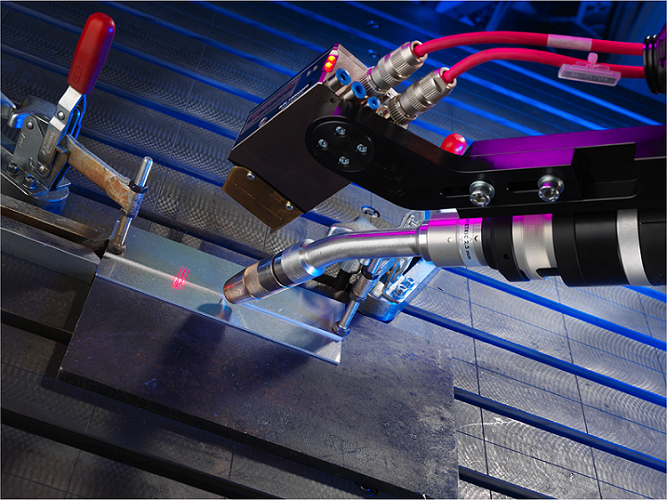
Laser Seam Tracking
(courtesy https://fabricatingandmetalworking.com/optical-seam-tracker-for-robotics-and-hard-automation/)
|
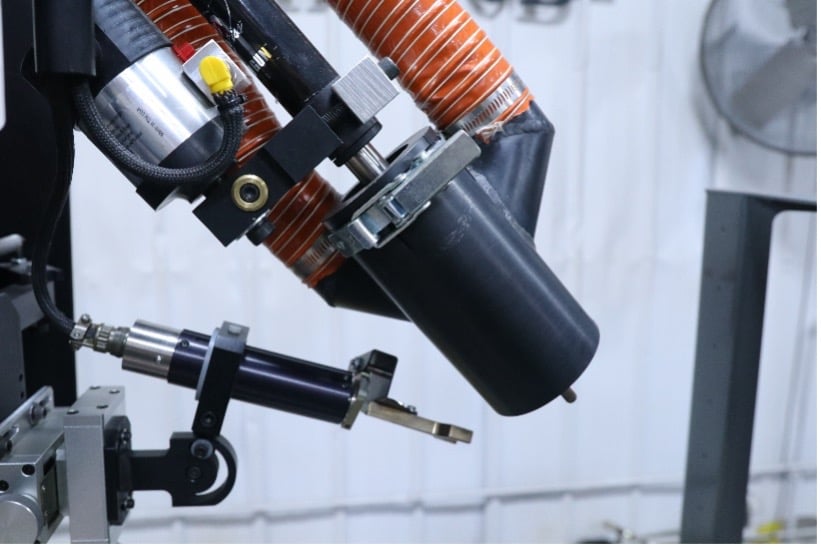
Tactile Seam Tracking
(courtesy https://bancrofteng.com/tactile-seam-tracking-systems/ )
|
Through Arc Seam Tracking
(courtesy https://fsmdirect.com/common-sense/ )
|
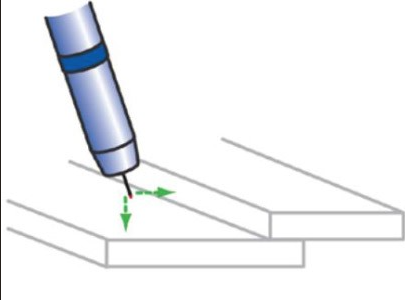
Traditional Seam Tracking Devices
There are three types of seam tracking devices typically used in automatic welding: Tactile (where a physical probe contacts the weld seam and provides feedback), Through-Arc (using feedback from Electrode motion, Voltage and Amperage) and Optical Seam tracking (using Laser-based triangulation vision to measure edges relative to a reference point).

|
While all of these Seam Tracking technologies have their place as effective tools, none of them provides any visual feedback to the operator about the process. Consequently, the operator is unable to confirm visually if the process is in control or not.
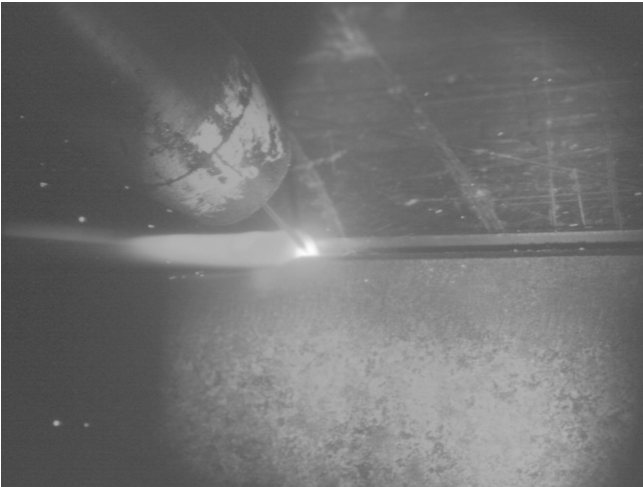
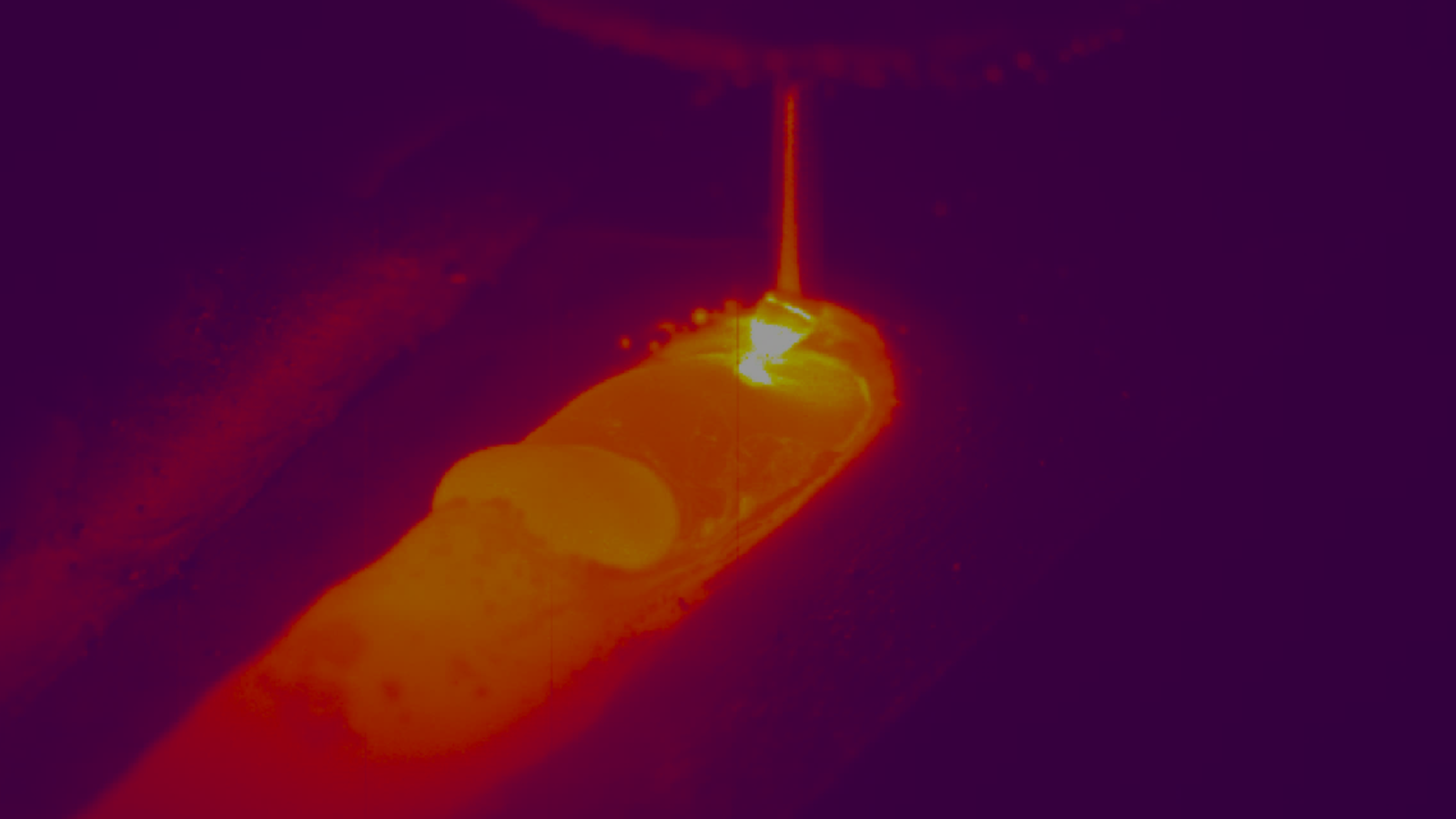
Adding a weld camera is a great way to solve that problem: it provides crystal-clear images of the weld arc and its surrounding background using 140+dB HDR (High Dynamic Range) imaging. Features like the torch, arc, melt pool and seam are clear enough in a weld camera image to allow the operator to understand what is going on with their process and determine if any process inputs require adjustment.
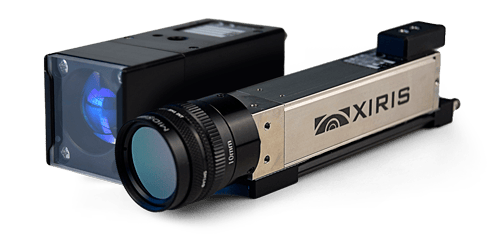 The Xiris XVC-750 NIR Weld Camera and Illumination (Xiris Automation) |
However, implementing a weld camera AND a laser/tactile/through-arc seam tracker on the end effector of an automated welding system results in a bulky, heavy combination that is not suitable or ideal for all automatic welding process.
What if you could put seam tracking and a weld camera together in one unit? Xiris has just done that!
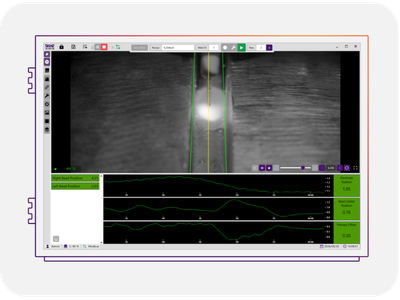
Xiris has developed seam tracking software that works with its NIR (Near Infrared) HDR cameras. WeldStudio Tracker, Xiris’s new seam tracking software incorporates AI machine vision tools using models trained on your application and process. The result is a robust tracking capability of key features of the root, weld bead and joint that can provide accurate and reliable seam tracking measurements across multiple weld passes. Once set up and integrated to the welding cell for a particular process, the tracking system can be set to operate without further operator intervention while still giving operators an excellent view of the process.
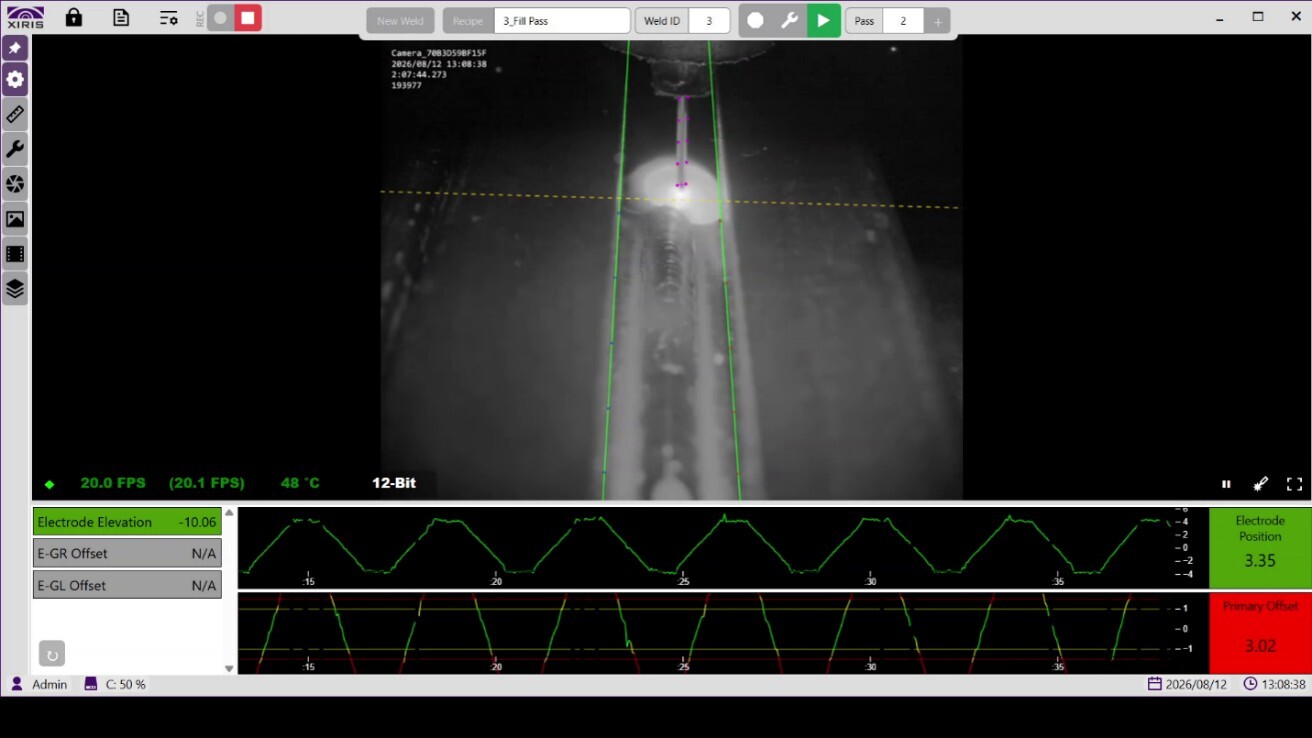 The Xiris WeldStudio Tracker Software Following a GMAW Process (Xiris) |
This new technology provides a number of advantages to the user over other tracking technologies. Because its tracking measurements are made right at the arc, there is no offset needed to account for the distance between the seam measurement position and the electrode arc position.
In addition, because the camera image has both the torch and the seam/groove in the same image, their absolute positions and relative measurements due to movement or distortion can be measured.
Using a camera image to perform the tracking measurement rather than a single laser line or touch point has other advantages as well – localized variations in reflectance or flying spatter do not have much impact on the measurement because multiple points in the images are used to make each measurement.
By using a camera-based seam tracking system such as the WeldStudio Tracker, users are able to monitor what is going on with the process as well as performing seam tracking with one piece of hardware, saving space and weight around the weld torch and cost for the entire implementation.
Summary
The Xiris WeldStudio Tracker system has been designed for automatic welding cells in mind: combining high quality images of the weld that allows the operator to monitor the process, with robust AI machine vision software tools to reliably provide accurate alignment measurements that is easily integrated into most automated welding equipment.
|
|