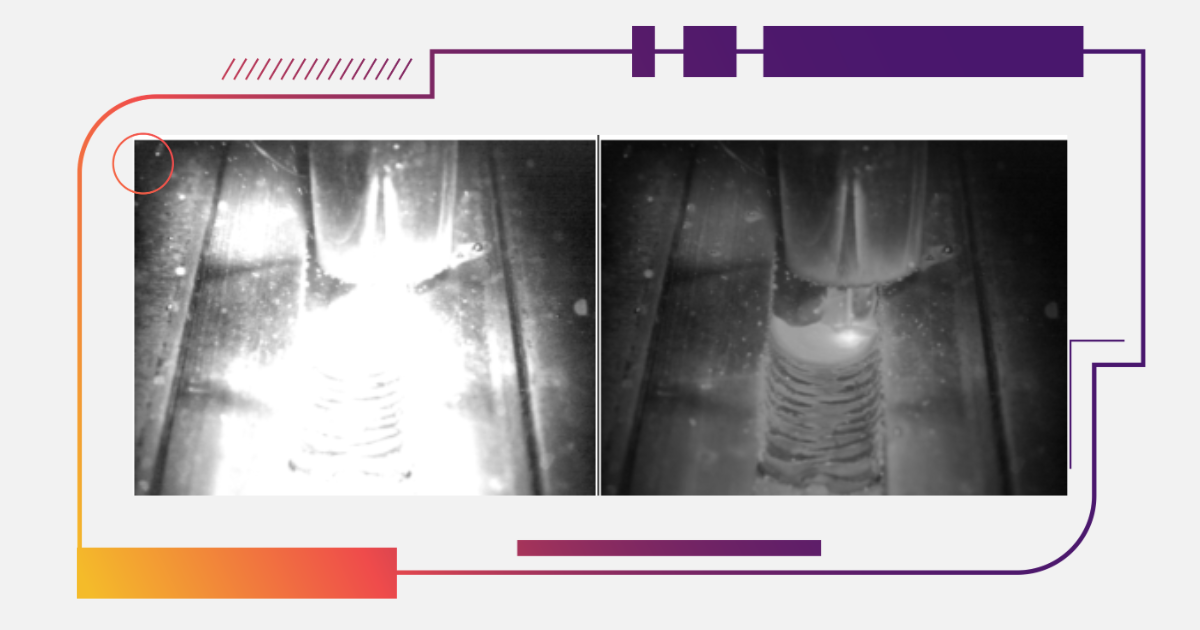


As humanity plans to return to the Moon and establish sustainable lunar bases, scientists are actively researching how to use the Moon’s natural resources for construction. A promising approach is in-situ additive manufacturing (AM) — a process that allows structures to be built directly on the lunar surface using local materials. In a recent study, researchers investigated the feasibility of using lunar regolith, a dusty, ceramic substance that covers the Moon’s surface, in Laser-Based Directed Energy Deposition (DED-LB), a form of AM.
%20brought%20by%20Apollo%2011%20mission.png?width=487&height=355&name=A%20-%20Lunar%20dust%20material%20(regolith%20agglutinates)%20brought%20by%20Apollo%2011%20mission.png) |
%20brought%20by%20Apollo%2011%20mission.png?width=486&height=351&name=B%20-%20Lunar%20dust%20material%20(regolith%20agglutinates)%20brought%20by%20Apollo%2011%20mission.png) |
Since actual lunar regolith is unavailable on Earth except for a few samples brought by the Apollo missions and the Soviet Luna program, the researchers turned to mullite, a synthetic aluminosilicate ceramic whose chemical composition is close to the Moon’s highland regolith’s. Mullite’s high thermal stability makes it a strong candidate for simulating how real lunar dust would behave under laser-based 3D printing techniques.
The DED-LB process is particularly promising for lunar applications because it doesn’t require binders or other additives — it uses high-energy lasers to melt and deposit material layer by layer, making it ideal for building large, durable components such as walls, landing pads, or even shelters. The key challenge lies in understanding how the material melts, cools, and solidifies in the harsh lunar environment, which makes temperature control critical.
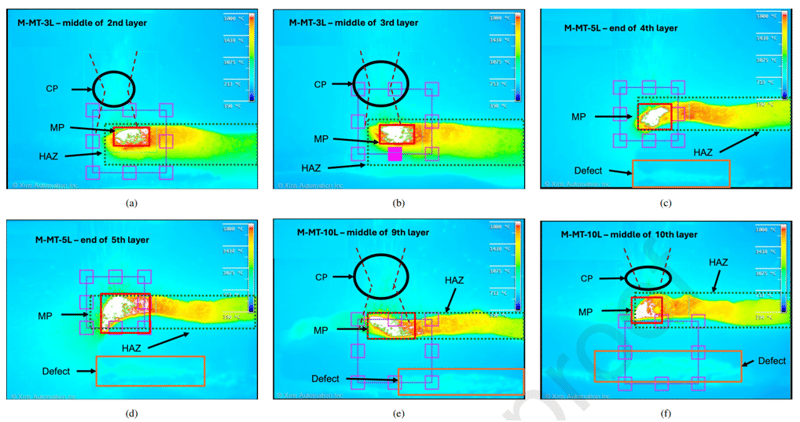
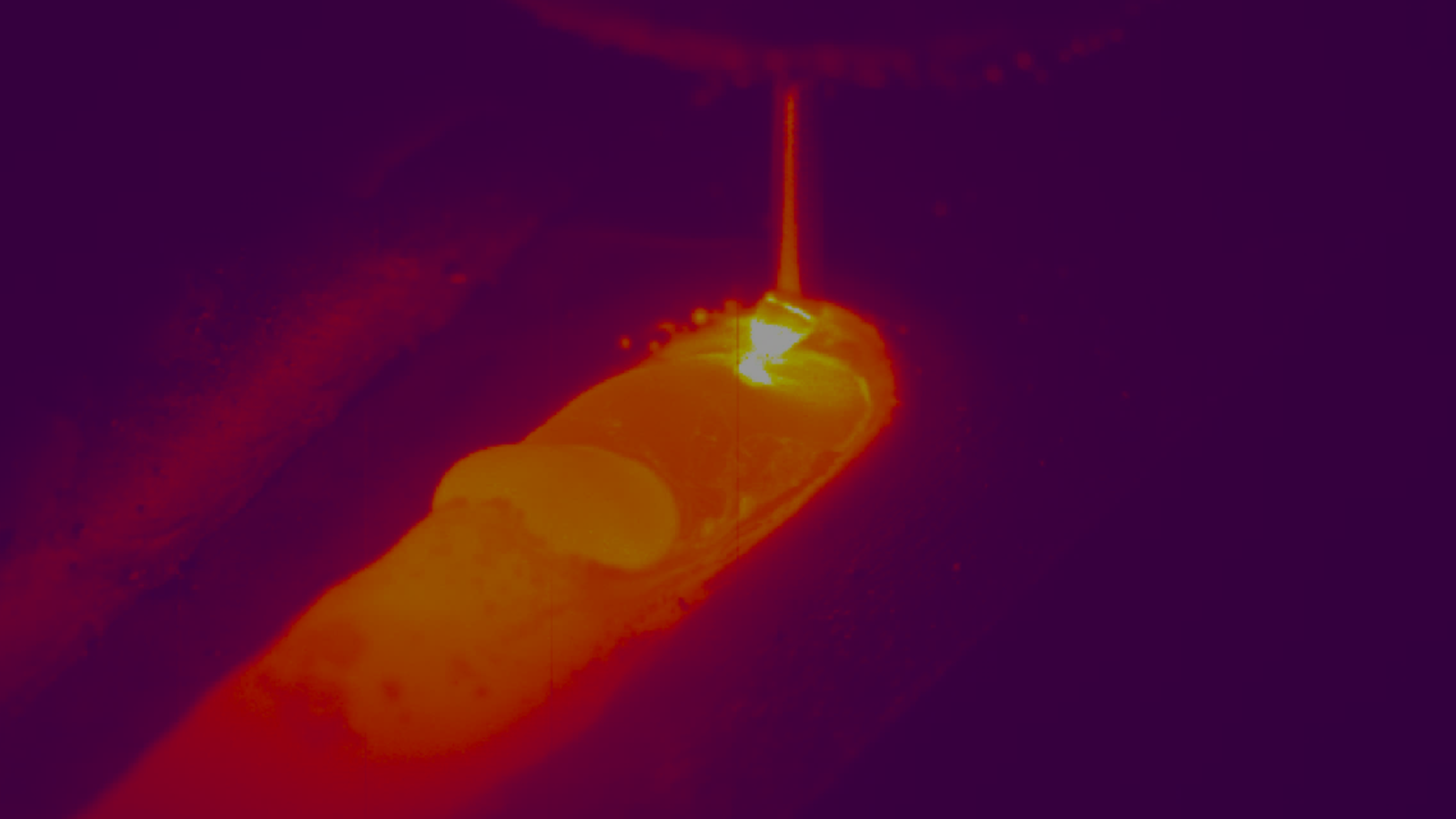
Figure 2. Recorded with Xiris XIR-1800
|
To better understand the behavior of the mullite feedstock during the printing process, the team used the Xiris XIR-1800 thermal camera, which employs Short-Wave Infrared (SWIR) technology. This camera allowed researchers to capture accurate melt pool temperatures — a crucial factor in determining the quality and consistency of printed structures. The authors noted that unlike conventional Mid-Wave Infrared (MWIR) and Long-Wave Infrared (LWIR) cameras, the SWIR-based XIR-1800 provides higher accuracy and wider range, especially at the elevated temperatures required for ceramic melting.
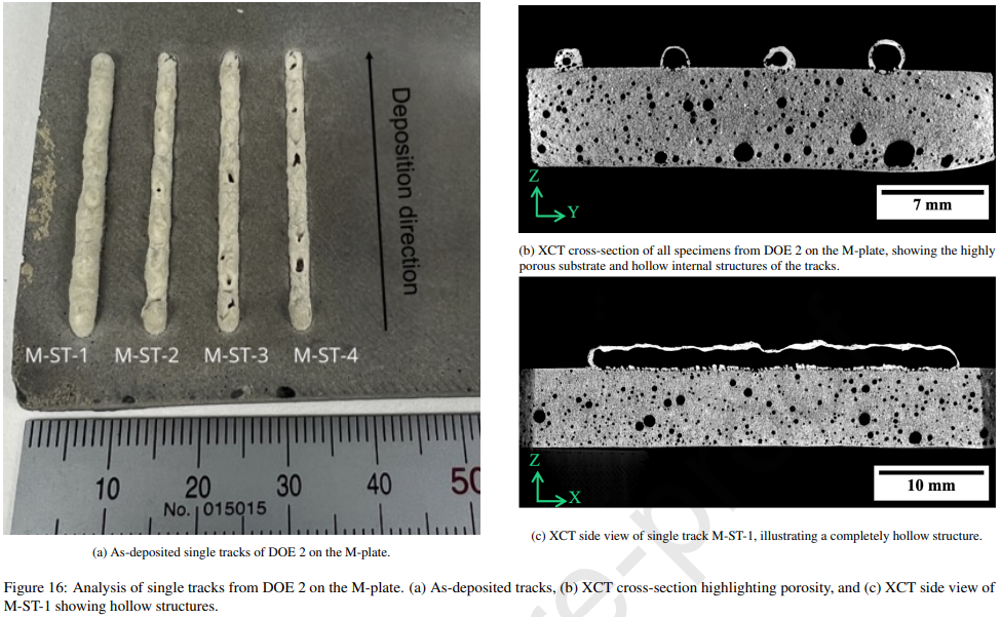
Using this thermal data, the researchers were able to define optimal printing parameters, such as laser power and scanning speed, that produced high-quality multilayer structures. Microstructural analysis of the printed parts further confirmed the material's integrity and consistency. These findings are significant because they offer a proof-of-concept for using regolith-like materials in space-based manufacturing.
 |
Ultimately, this study demonstrates that mullite, as a terrestrial analog, can pave the way for developing robust AM processes using actual lunar regolith in the future. By leveraging advanced thermal imaging and laser deposition technologies, scientists are taking tangible steps toward autonomous construction on the Moon, reducing dependence on Earth-based supply chains.
As space agencies and private companies continue pushing the boundaries of lunar exploration, such research will be foundational in creating sustainable off-Earth habitats. The Moon may soon become not just a destination, but a construction site — one layer of regolith at a time.

|