


|
Welding is one of the few fabrication processes where the joint itself becomes part of the structure, which means any weakness at that joint directly limits the strength of the entire component. Among the many conditions that can reduce that strength, cracks forming at the weld toe stand out because they originate where stresses naturally concentrate. You might see just a hairline fracture, barely visible without magnification, but that small defect is positioned at the exact point where loads transfer between materials. Over time, it can quietly grow.
The seriousness of toe cracks comes from how they affect long-term performance. By understanding how and why they form, you’ll be able to control the welding environment so they don’t appear in the first place.
What Are Toe Cracks in Welding?
Toe cracks are linear fractures that form at the outer edge of the weld bead where it meets the base metal. This boundary is called the weld toe. It’s an area that sees intense thermal cycling: during welding it’s heated almost to melting, then it rapidly cools as heat flows away into the base plate. That sharp temperature swing makes the microstructure around the toe behave differently from the rest of the weld or base metal. Under the microscope, this zone is part of what’s known as the heat-affected zone, or HAZ. It’s often harder and more brittle than the rest of the material, and that brittleness makes it prone to cracking when residual stresses remain locked inside.
In appearance, toe cracks usually run along or just outside the edge of the bead. They can be short and straight or gently curved, and they often look like very fine surface-breaking lines. In multipass welds, they sometimes extend into the HAZ or run between passes. They’re more common in high-strength steels, especially when joints are highly restrained and can’t expand or contract freely during welding.
Consequences of Toe Cracks in Welds
Toe cracks have a direct effect on the mechanical reliability of welded structures. They act as stress concentrators, meaning they interrupt the smooth flow of stress through the material and funnel it into a very small zone. That’s why even small cracks can become the starting point of much larger failures. When a structure undergoes vibration or repeated loading, these cracks open and close like tiny hinges, which accelerates their growth. To prevent them, it helps to understand what physical conditions make them form in the first place.
Early Fatigue Failures
Fatigue failure starts when microscopic defects grow under repeated loading, and toe cracks are perfectly positioned to trigger it. The sharp transition from the weld face to the base metal creates a local notch effect. Every time the structure flexes, this notch sees more strain than the surrounding material. Over thousands of cycles, the crack tip advances a tiny amount each time. Eventually, the crack reaches a critical size where it can no longer be contained. That’s often when the part fails without warning. Engineers studying failed structures frequently find that toe cracks were present long before any visible deformation appeared.
Fracture and Catastrophic Failure
Fracture happens when the stress intensity at a crack tip becomes high enough that the material ahead of it can’t resist anymore. Toe cracks accelerate this process by concentrating stress in the hardened HAZ. If the structure experiences a sudden overload or impact, the crack can shoot across the section in a single event. This kind of brittle fracture is especially common in cold environments or when the steel is already hardened from fast cooling.
Corrosion and Environmental Degradation
A crack that reaches the surface creates a sheltered cavity. Moisture and dissolved salts collect there, and oxygen levels fluctuate as the fluid stagnates. That creates a local electrochemical cell, which drives corrosion inside the crack even faster than on exposed surfaces. Because coatings can’t reach inside the crack, there’s no protective barrier to slow it down. Over time, the rust expands and pushes the crack open wider, letting more contaminants in. This self-reinforcing cycle can eat away at the metal from within while leaving the outside looking intact.
Main Causes of Toe Cracks Welding Defects
Toe cracks appear when high residual stress, brittle microstructure, hydrogen, and sharp geometry combine at the weld toe. Cooling contraction locks tensile stress into this zone, especially in restrained joints. Rapid cooling can create brittle martensite, while hydrogen from moisture or filler lowers ductility. Sharp toe angles then focus stress, making cracks likely. When these factors align, toe cracks often appear in the same predictable spots along a weld.
High Residual Stresses at the Weld Toe
Residual stresses are the locked-in forces left behind after welding. They form because the molten metal contracts as it cools while the surrounding base metal holds it in place. The toe region is where this tension builds most strongly. The sharper the temperature gradient, the higher the residual stress. Thick sections, high heat input, and rigid restraints make this worse. When the stress at the toe exceeds the local strength, cracks can open even without external loading.
Brittle or Hardened Microstructure in the HAZ
The heat-affected zone experiences temperatures high enough to change its microstructure but not high enough to melt. If it cools quickly, especially in high-carbon or alloy steels, it can form martensite. Martensite is hard but brittle, so it can’t deform to relieve stress. Any tiny flaw can become a crack starter.
Hydrogen-Assisted Cracking
Hydrogen atoms are small enough to diffuse into solid steel. When they collect at microstructural defects, they make the metal brittle and reduce its ability to stretch. This makes cracks easier to initiate and grow. Sources include moisture on joint surfaces, damp flux, or improperly stored filler materials. The risk is highest when hydrogen combines with high stress and brittle microstructures.
Geometric Stress Concentrators
Sharp toe angles, undercut profiles, or abrupt bead transitions all focus stress into a very small area. This notch effect raises local stress intensity and makes it easier for cracks to start. A smoother toe transition spreads the load more evenly and lowers the peak stress.
How to Prevent Toe Cracks
Preventing toe cracks starts with controlling the conditions that let them form. Heat management, hydrogen control, smooth bead geometry, and real-time monitoring work together to keep the weld toe ductile and stress levels low, removing the environment that allows cracks to develop.
Control Heat Input and Cooling Rates
Consistent heat input prevents sharp thermal gradients. Preheat and interpass control slow down cooling so the HAZ forms a tougher structure. Travel speed and voltage balance keeps the pool hot but not oversized, allowing smooth fusion without excessive contraction stress. This steady thermal environment removes one of the main drivers of toe cracking.
|
|
Minimize Hydrogen in the Weld Zone
Dry low-hydrogen electrodes in ovens, clean all surfaces to remove moisture and oil, and keep filler materials sealed until use. These simple steps stop hydrogen from entering the weld and cut off one of the main crack triggers. Even small hydrogen levels can combine with stress to open cracks, so prevention here is worth the effort.
Optimize Bead Shape and Toe Geometry
Shape affects stress flow. Aim for beads with smooth toe transitions instead of sharp angles. Adjust technique or weave pattern to spread the molten metal evenly across the joint edges. A gentle toe profile spreads stresses over a wider area and makes cracks far less likely to form.
Monitor Weld Pool and Toe Fusion in Real Time
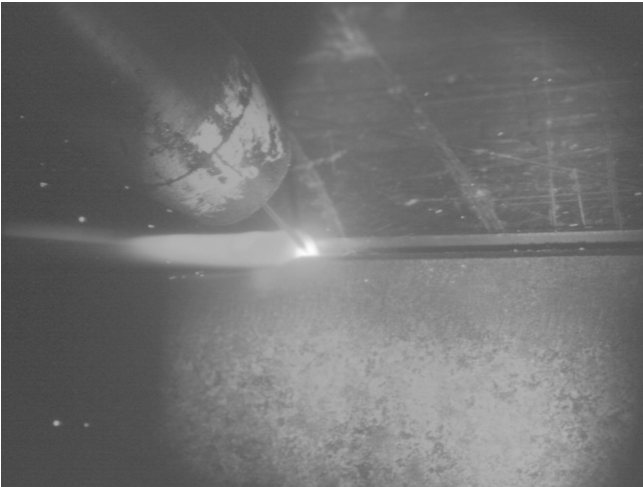
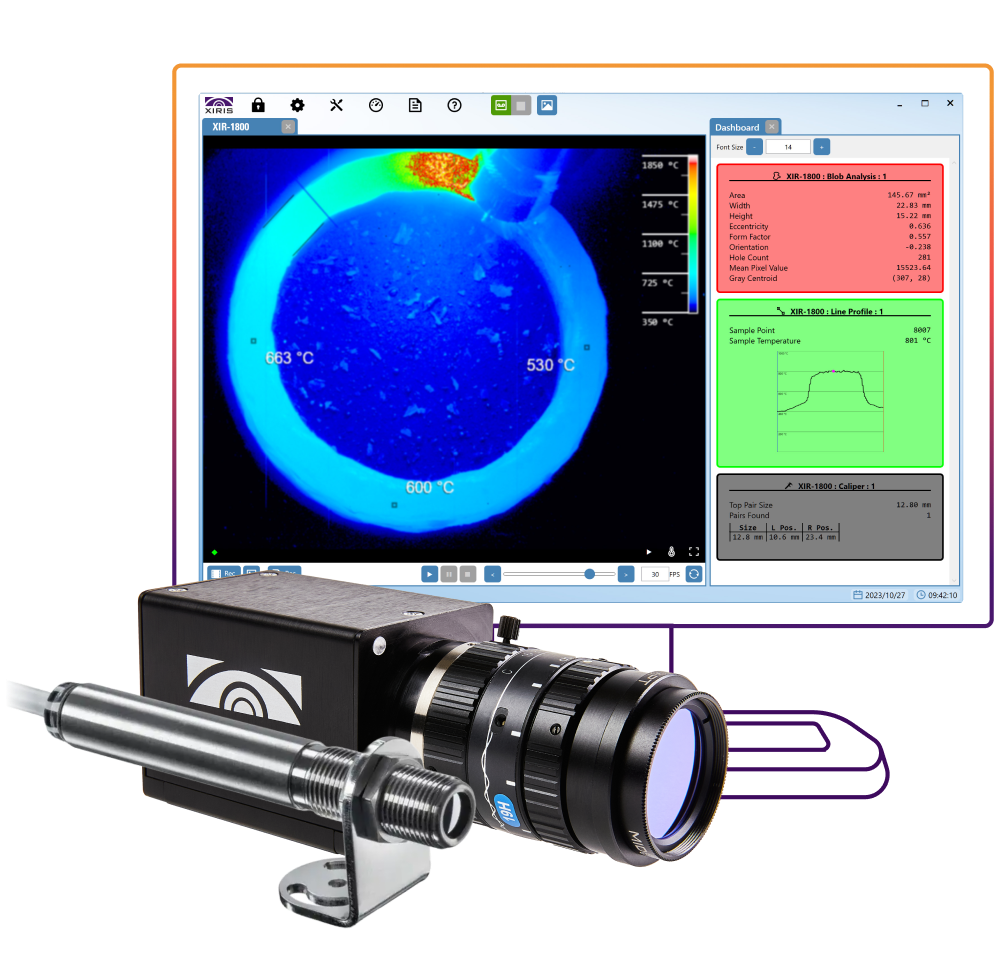
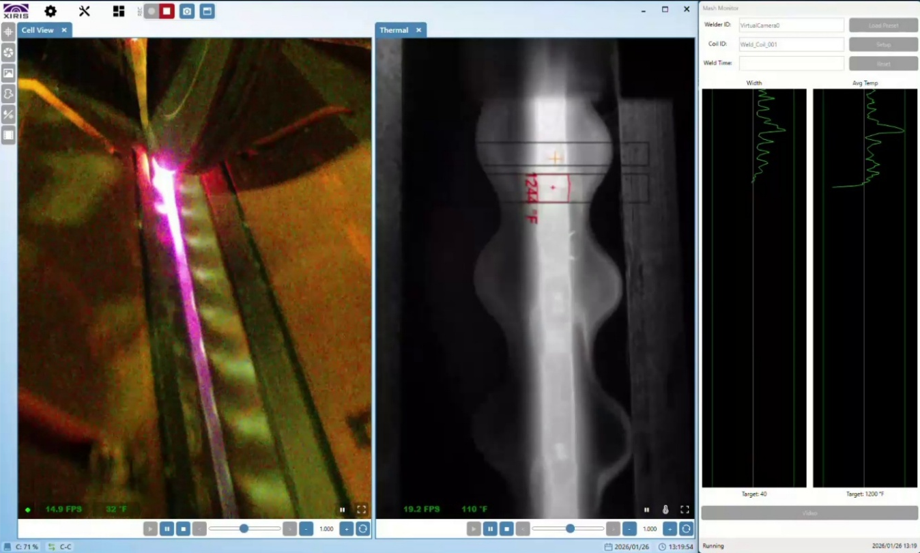
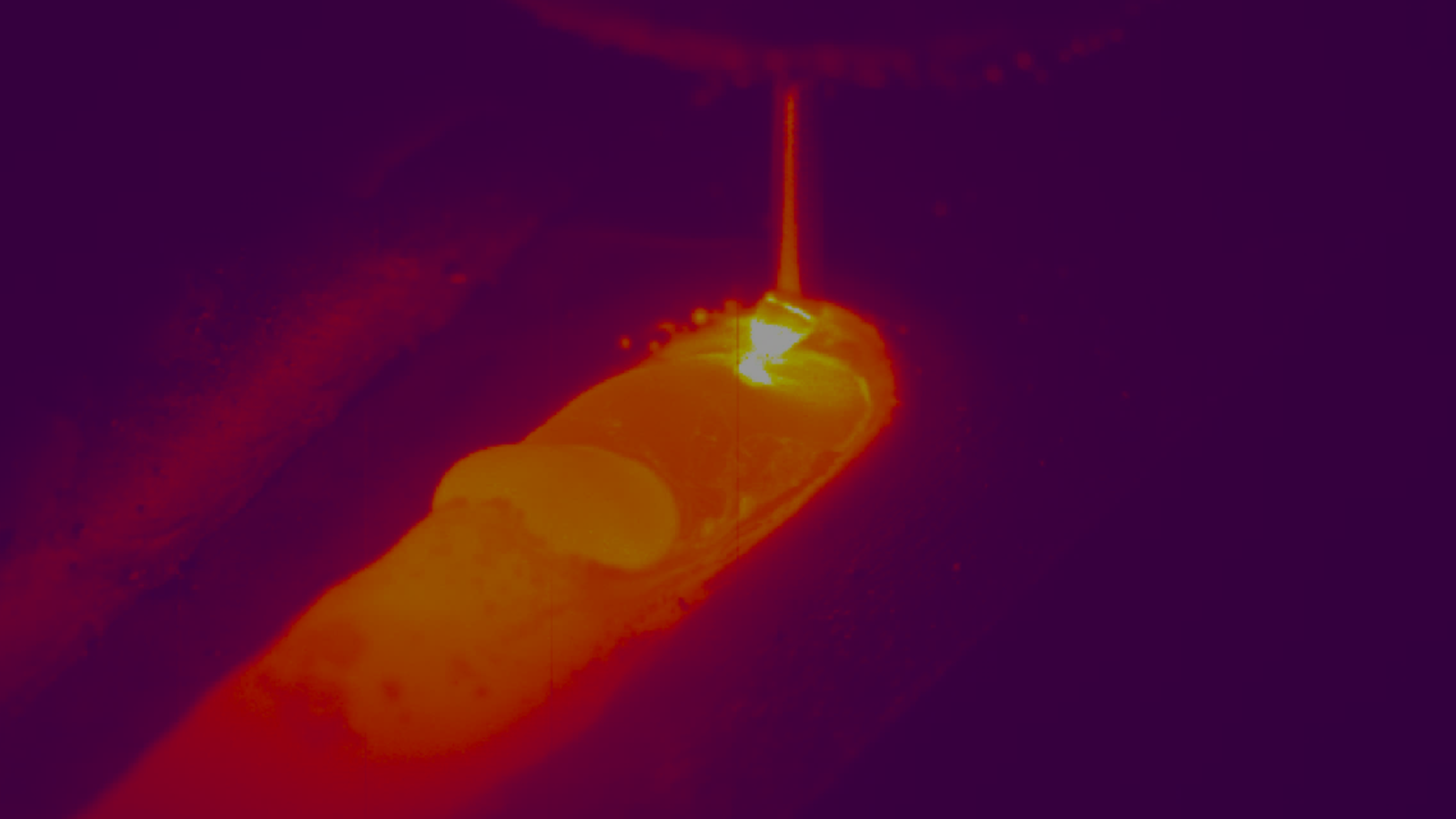
HDR Xiris weld cameras can capture the arc, pool, and toes simultaneously without glare, giving operators a clear view of toe wetting and cooling behavior. Machine vision software can track pool geometry and highlight conditions that typically appear before cracking, such as overly convex beads or sudden toe cooling. Systems that log current, voltage, travel speed, and temperature alongside video make it possible to link settings directly to toe behavior. This lets you adjust parameters proactively rather than waiting for cracks to appear.
Conclusion
Toe cracks may start small, but their position at the weld toe makes them critical. They act as stress concentrators, trigger fatigue, enable fracture, and create sites for corrosion to grow. They form when residual stress, brittle microstructure, hydrogen, and sharp geometry align at the edge of the bead. Controlling heat input, cooling rates, hydrogen levels, and bead shape removes these conditions. Real-time vision and monitoring systems, such as Xiris weld cameras, add a layer of certainty by showing exactly what’s happening at the toes while the weld is being made. With the right process control and visibility, it’s entirely possible to prevent toe cracks and build joints that stay sound for their full service life.

|