


|
Crater cracks are one of those defects that can appear almost invisible during welding but turn into serious trouble later. They form at the very end of a weld bead, right when the arc is broken and the small molten pool at the tip solidifies. As that tiny pool cools, it contracts, and if there isn’t enough filler metal to compensate for the shrinkage, tension builds up at the center. Because hot metal has low strength, that tension can pull the crater apart as it freezes. The result is a fine star-shaped crack right in the center of the crater, with thin lines sometimes radiating outward. Understanding what crater cracks are, what they do to a weld, why they form, and how to prevent them is essential for building joints that stay sound in service rather than slowly breaking apart from the inside out.
What Are Crater Cracks?
Crater cracks form during the last instant of welding, when the arc stops and the small molten crater at the bead’s end begins to solidify. Cooling starts at the outer rim, which freezes first, while the still-molten center contracts and pulls on that rigid edge. If there isn’t enough molten metal left to compensate for the shrinkage, tension builds until the weak, hot metal tears apart, leaving a sharp crack across the grain structure. These cracks usually appear as fine hairline marks forming a small star in the center of the crater, often surrounded by a shallow concave pit. Under strong lighting, a dark central line and faint branches radiating outward become visible, and their pointed tips follow the solidification pattern. They’re easy to miss on rough beads, which is why angled light or magnification helps, and it’s important to distinguish them from crater pipes, which are smooth shrinkage cavities without radiating lines. Crater cracks tend to form where the puddle is left unsupported at the end of a run, especially on long beads, multipass stops, restarts, vertical or overhead welds where gravity thins the crater, or on thin and high-conductivity metals like aluminum that cool too quickly for stresses to relax.
Consequences of Crater Cracks in Welded Structures
Crater cracks are small, but their mechanical impact can be severe. They behave like miniature notches embedded in the weld metal. Because the crack tip is sharp, stress lines concentrate there. Under cyclic loading, even modest stresses can make the crack grow. The defect also interrupts the continuous load path through the weld. Over time, the combination of fatigue growth, overstress around the crack, and corrosion-driven material loss can destroy the local joint section, making crater cracks a very important defect to prevent.
Stress Concentration and Early Fatigue Failure
The main risk of crater cracks is how they accelerate fatigue failure. Their pointed geometry concentrates stress at the crack tip. When the joint flexes, that tiny area stretches more than its surroundings. Even if the overall load is low, the local strain at the tip can exceed the metal’s fatigue limit. Each cycle grows the crack slightly deeper. Because this happens inside the weld metal, it’s invisible at first. By the time the crack shows on the surface, it may already be large enough to compromise the joint.
Loss of Effective Cross-Section
Crater cracks reduce the cross-section of solid metal carrying load. The crack itself doesn’t resist stress, so the surrounding metal has to carry more. That localized overstress can trigger yielding or microcracking nearby. The effect is like cutting a notch in a beam: the stress redistributes around it, creating hotspots. This makes the joint weaker than its apparent size suggests. On highly loaded welds, this lost effective area can be enough to drop the safety margin.
Crack Propagation into Weld and Base Metal
Once a crater crack exists, it acts as a ready-made starter for larger cracks. Under steady or cyclic loads, the crack can grow through the weld metal and into the heat-affected zone. Because the crack tip is already sharp, it takes little extra energy to drive it forward. Over time, it can connect with other micro welding defects and form a continuous fracture path. This kind of crack growth turns a small surface defect into a major structural flaw.
Corrosion Acceleration in the Crater Zone
Crater cracks also create a geometry that traps moisture and debris. The narrow crevice at the crack root has low oxygen while the surrounding surface stays oxygen-rich. This difference drives localized galvanic corrosion. The attack often starts as pitting along the crack, which then deepens the notch and further concentrates stress. In humid or salt-laden environments, this corrosion-crack interaction speeds up joint deterioration.
Why Crater Cracks Form: The Underlying Causes of the Defect
Crater cracks form because of how molten metal solidifies under tension. When the arc stops, the crater shrinks as it freezes. The root cause is a lack of filler metal to offset the shrinkage. Anything that makes the crater cool faster or prevents stress from relaxing makes the problem worse. This includes low heat input, fast travel, thin sections, high-conductivity alloys, and joints with high restraint.
Lack of Crater Fill and Concave Geometry
The most direct cause is stopping the arc abruptly without adding filler. This leaves a crater with a concave shape and less molten volume. As it freezes, the volume contracts and the stress tears the center. Adding a final droplet before extinguishing the arc fills the crater slightly convex, which resists shrinkage stress and stops cracks from forming.
Rapid Cooling and Steep Thermal Gradients
Fast cooling speeds up solidification and raises thermal gradients inside the crater. Thin sections or high-conductivity metals like aluminum pull heat out quickly, leaving the center hot and shrinking while the edges are already rigid. The greater the temperature difference between center and rim, the higher the stress.
High Restraint and Residual Stress
If the weld is locked in by fixtures or stiff surrounding material, it can’t contract freely. This restraint makes the crater the only place the joint can shrink, which intensifies tension as it cools. Even small craters can crack if the surrounding joint is fully restrained.
Metallurgical Susceptibility
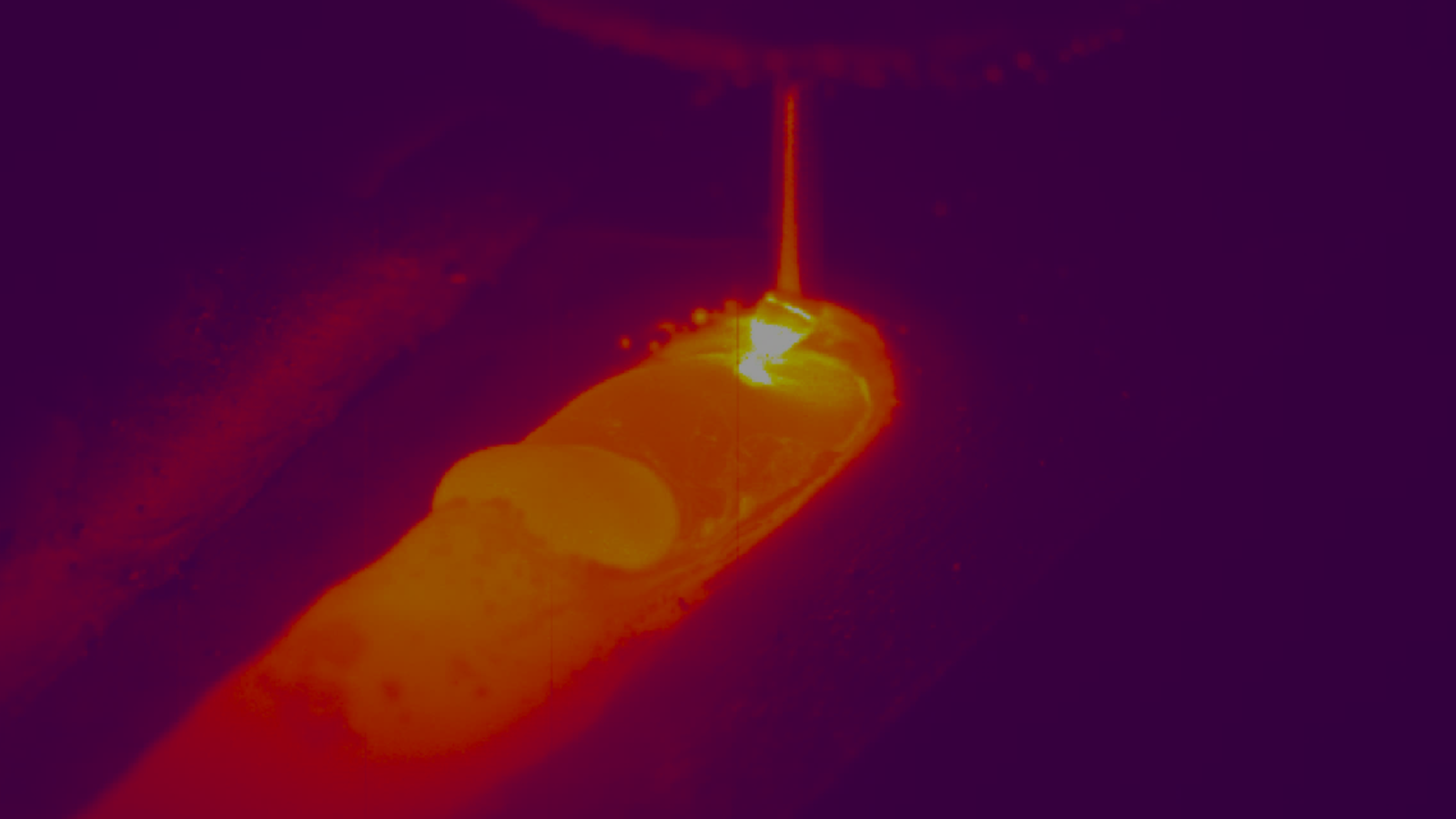
Some metals are simply more prone to crater cracking. Aluminum alloys shrink a lot as they cool and have low strength at high temperatures, so the crater tears easily. Austenitic stainless steels can also crack if the crater cools too fast, because they lose ductility at high temperatures. High-carbon steels can suffer from low hot-ductility ranges that make them vulnerable during the last stages of solidification. Knowing the alloy’s behavior helps plan parameters to stay out of this risk zone. Real-time thermal monitoring of the melt pool can help verify that temperatures stay within the safe range for crack-sensitive alloys.
How to Prevent Crater Cracks
Preventing crater cracks means controlling how the crater solidifies and verifying that it gets properly filled before the arc ends. You want the crater to freeze slightly convex with enough molten metal to absorb shrinkage without tearing. That involves adjusting the way you end the bead, controlling heat input, and using monitoring tools to catch missed crater-fill steps.
Proper Crater Fill Techniques
Before breaking the arc, add a small droplet of filler to leave the crater slightly raised. Some welders also back-step a few millimeters into the solid bead, which lets the crater freeze against solid metal and stay supported. Modern power sources often include crater-fill or crater-current delay features that taper current slowly as the puddle solidifies, letting more filler feed in. These methods counteract shrinkage tension by giving the crater enough metal to resist contraction.
Controlled Cooling and Heat Input
Keep heat input balanced so the crater doesn’t freeze too fast or too hot. Low current and fast travel create small craters that solidify instantly, while very high heat input makes large craters with more shrinkage volume. A steady, moderate energy density lets the crater cool slowly enough for stresses to relax. Slowing travel slightly in the last few millimeters of the bead can also give the crater more time to fill and flatten.
Reduce Restraint at Termination Points
If possible, place the end of the bead where the joint can flex a little during cooling. Sequencing welds so they don’t lock the part in place before the crater freezes helps too. Even slight movement during cooling can absorb shrinkage stress and prevent the crater from tearing itself open.
Use of Weld Cameras and Vision Systems
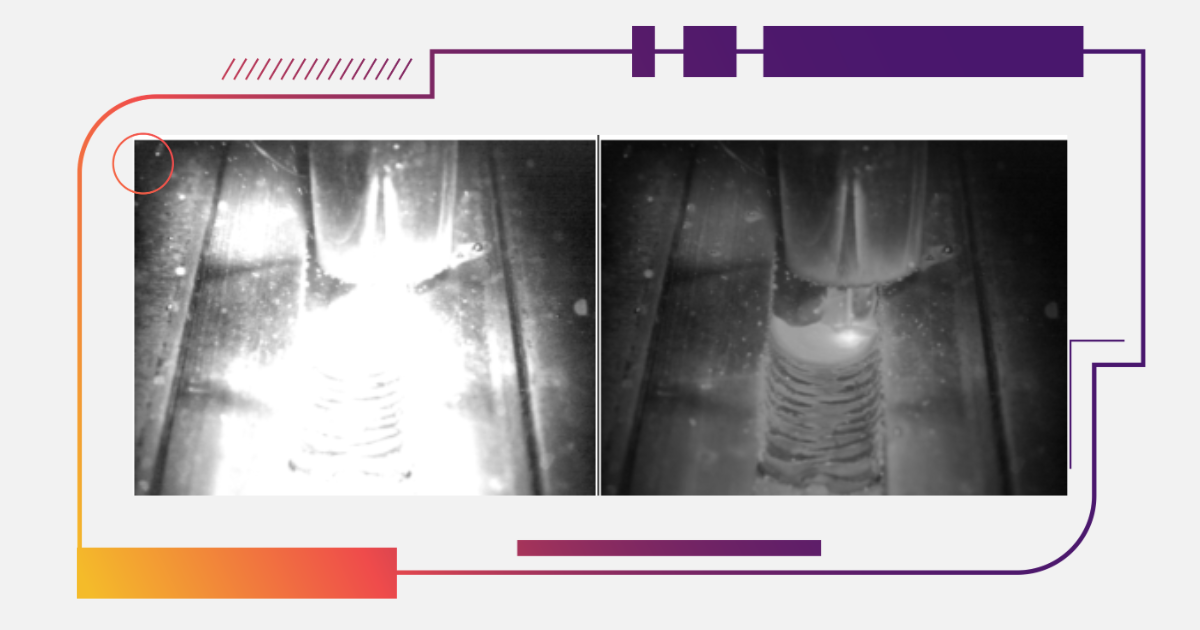
Real-time weld cameras are useful for verifying crater fill. High-speed or HDR cameras can show how the puddle shrinks at the bead end. If the crater stays hollow or pulls inward abruptly, it’s likely underfilled. Vision systems can track bead geometry and detect concave end shapes. Adding these tools gives immediate confirmation that crater-fill steps worked instead of leaving it to post-weld inspection.
Conclusion
Crater cracks remind us how much happens in the final seconds of a weld. The arc might be gone, but the metal is still moving, shrinking, and reshaping itself in ways that decide whether the joint will last. Treating that moment with the same care as the rest of the bead changes everything. When operators focus on shaping a smooth, fully filled crater and engineers support them with real-time feedback, those hidden weak points stop appearing.
Tools like Xiris weld cameras can help make that feedback immediate, showing exactly how the crater forms and freezes. It shifts crater crack prevention from guesswork to observation.
Frequently Asked Questions
|
|